
Penguin GO!
MOREFUN(H.K.) LIMITEDCasual
4.3664.00 Reviews
- Version
- 1.1.18
- Installs
- 100.00K
- Age Rating
- Teen
Screenshots
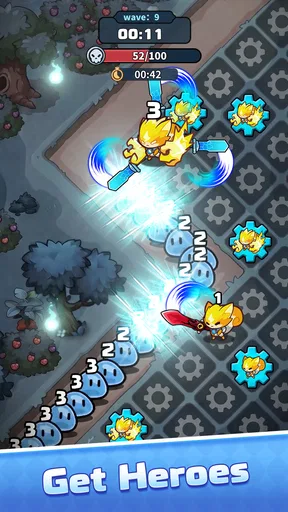

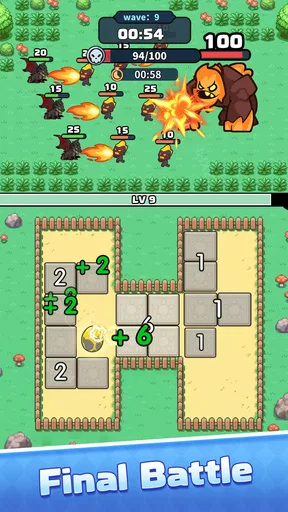
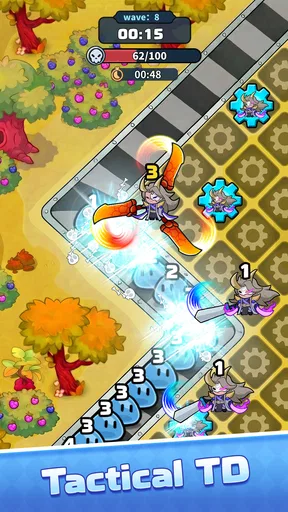
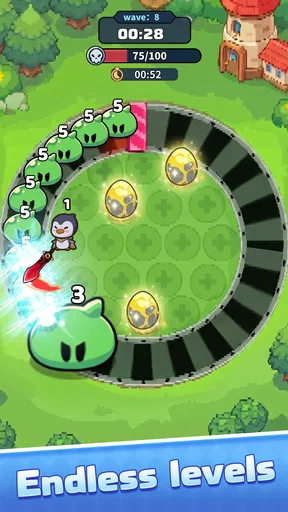
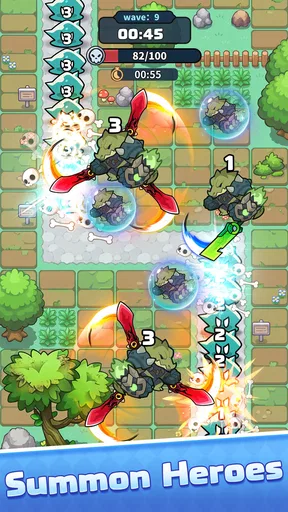
Our Review of Penguin GO!
 Analysis by Appyee
Penguin GO! is the kind of casual game that makes a strong first impression through a very simple promise: help a penguin survive a world overrun by zombies. I found it easy to understand within moments, which is exactly what I want from a game designed for short sessions. It is free to download, carries a Teen content rating, and comes from MOREFUN(H.K.) LIMITED. The central appeal is not a complicated story or a huge learning curve; it is the quick satisfaction of opening the game, making a few decisions, and seeing whether the penguin can push a little farther.
That simplicity is both its best quality and its biggest test. Many casual games are enjoyable during the first week but become background clutter once the initial novelty disappears. My experience with Penguin GO! is more balanced: it has enough personality and immediate purpose to invite repeated visits, but its long-term value depends heavily on whether you enjoy compact zombie-themed challenges rather than expecting a deep adventure. I would recommend trying it if you want something light for spare moments, while being more cautious if you need a game with a constantly changing structure.
What the first week feels like
The opening appeal comes from the contrast between the cute penguin theme and the threat of zombies. That combination gives the game a clearer identity than an anonymous puzzle or idle title. I never needed a long explanation to understand the mood: this is a playful survival scenario, presented in a way that feels approachable rather than grim. The store summary, “Freeze Out Zombies!”, captures that directness, while “Penguin GO!” keeps the focus on the character and the forward motion.
During the first few sessions, the biggest advantage is low friction. I can pick it up without reserving a large block of time or remembering a complicated control system. That makes it suitable for a commute, a waiting room, or the few minutes before bed when I want something more interactive than scrolling. It also works well as a casual break between demanding tasks because the game does not ask me to become an expert before I can enjoy it.
The first-week experience is helped by the fact that the theme gives ordinary progress a little more charm. A penguin fighting zombies is more memorable than another generic character moving through interchangeable stages. That does not automatically make every session exciting, but it gives me a reason to return and see what happens next. For younger players, the colorful setup may be appealing; for adults, the same contrast can make the game feel pleasantly silly rather than overly serious.
I would not describe the early experience as a replacement for a full console-style campaign. The game belongs firmly in the casual space, and that matters when setting expectations. Its strength is immediate playability, not a sprawling world that demands concentration for hours. If I have ten minutes and want a focused distraction, the format makes sense. If I want rich character development, elaborate exploration, or a long-form strategy system, I would choose a different type of game.
Why the simple format works at first
One useful way to approach it is to treat each visit as a small routine rather than a major gaming session. I open the game, play until the current attempt naturally ends, and decide whether I want another round. This keeps the experience relaxed and prevents the usual casual-game mistake of turning a short break into an unplanned marathon. The penguin-and-zombie theme provides enough context to make those brief attempts feel connected, even when I am not playing for long.
There is also a practical benefit to the modest entry point. The game is free, so I can test whether the tone and pacing suit me before spending anything. Its current version is 1.1.18, and it supports devices running Android 7.0 or later. That makes it accessible to people using older Android hardware, although the actual comfort of play will still depend on the phone’s condition and available storage. I would install it on a secondary device only after checking that the game feels responsive enough for my habits.
The first-week question is not simply “Is this fun?” It is “Do I enjoy returning to this particular kind of fun?” The answer will be yes for players who like quick survival-flavored sessions and a light character theme. It will be less positive for anyone who needs constant novelty, a strong narrative, or a large collection of systems to master.
What remains after the novelty fades
Long-term value in a casual game usually comes from a reliable loop: there must be a reason to make another attempt, and that reason must remain satisfying after the theme stops feeling new. Penguin GO! has a fair chance of becoming a useful small-time game because it does not demand a large commitment. I can keep it as a pocket distraction instead of treating it as my main game. That distinction is important. Its recurring value comes from convenience and mood, not from delivering the scale of a major action title.
After the first month, I would judge it by how naturally it fits into my day. A game like this earns space when I can open it during a short pause and feel that the session was worthwhile, even if I did not make dramatic progress. It loses space when every visit feels like repeating the same obligation. My advice is to avoid forcing a daily habit. Play when the penguin-versus-zombie idea sounds entertaining, and take a break when it starts to feel like a chore.
The free entry point helps with that approach. There is no need to justify a large purchase before knowing whether the game belongs in your routine. However, in-app purchases range from $0.99 to $99.99 per item, so I would be deliberate about spending. The broad price range means the sensible strategy is to enjoy the free portion first and decide whether any optional purchase genuinely improves your experience. I would not spend simply because a progress moment feels slow or because the game is encouraging another visit.
This is where the game compares differently with other casual alternatives. A traditional match-three title may offer a more predictable puzzle rhythm. An idle game may require less active attention but provide a slower sense of progress. A larger survival game may deliver more depth but also demand more time, storage, and concentration. Penguin GO! sits between those options: it has more personality than a completely abstract time-killer, but it is lighter and less demanding than a full survival adventure.
That middle position can be useful. I would choose it when I want a themed activity without learning a large rule set. I would skip it in favor of a puzzle game when I need a calm, purely logical challenge, or choose a richer action game when I want meaningful exploration. The right comparison is not whether it beats every alternative; it is whether its short-session zombie-penguin format matches the moment.
How I would build a sustainable routine
My most practical tip is to separate enjoyment from completion. Instead of opening the game with the expectation that I must clear a certain amount of content, I would set a natural stopping point before beginning. This reduces fatigue and makes the next session feel optional rather than compulsory. It is especially helpful for casual games that can otherwise become repetitive through frequent short visits.
A second useful habit is to notice why I am returning. If I am coming back because I genuinely want another attempt, the game is still providing value. If I am opening it only because I feel I should collect something or maintain a streak, the routine may already be working against me. I prefer games that earn my attention through play rather than through pressure, and this is the standard I would apply here.
I would also keep the purchase system in perspective. A small optional payment may be reasonable for someone who plays regularly and wants to support the experience, but the top end of the listed purchase range is a serious commitment for a casual game. I would never treat spending as a solution to boredom. If the core loop is no longer enjoyable without extra help, that is usually a sign to take a break rather than buy my way through the problem.
Maintenance, friction, and reasons it may tire you
The maintenance burden is relatively low in the sense that the game is easy to understand and does not require me to remember a complicated strategy between visits. That makes it friendlier than games that punish a missed day or expect constant planning. Still, low complexity does not mean zero upkeep. I need to decide whether the regular return is still rewarding, keep an eye on optional spending, and accept that a simple loop can become familiar quickly.
The first source of fatigue is repetition. The same theme that makes the opening memorable can lose impact when every session is framed around the same penguin-against-zombies idea. A casual game can survive repetition if the decisions remain interesting, but it cannot rely on its mascot forever. Once the novelty fades, I pay more attention to the quality of the moment-to-moment play. If that part no longer holds me, the charming presentation is not enough.
The second source is the tension between short sessions and recurring prompts. Casual games are designed to invite frequent returns, but frequent invitations can make leisure feel like maintenance. I would be especially careful if I already have several games competing for attention. Penguin GO! works best as one small option, not as another obligation in an overcrowded rotation.
The third issue is the presence of in-app purchases. Even when I do not buy anything, knowing that items can cost anywhere from $0.99 to $99.99 affects how I approach progression. I prefer to decide in advance whether I am a free player or a paying player and then stick to that boundary. This protects the relaxed quality that attracted me in the first place. Parents should also remember the Teen rating and manage purchases appropriately when the game is used on a shared device.
The Teen content rating is worth considering before recommending the game to a child. The penguin presentation sounds playful, but the zombie theme may not suit every younger player. I would look at the game together with the intended player and decide based on their comfort with cartoon-style danger. For teenagers and adults who enjoy light action themes, the rating is unlikely to be a barrier; for families seeking a completely gentle game, a non-combat alternative may be a better fit.
Who should keep it installed
I think it is a good match for someone who wants a free casual game with a recognizable theme, quick access, and enough action to make a short break feel active. It is also a sensible choice for players who do not want to commit to a large download-and-learn routine every time they try something new. The game’s identity is clear, so I can tell fairly quickly whether it suits my taste.
It is less suitable for players who dislike zombies, cute-versus-dangerous contrasts, or repeated attempts built around a compact loop. I would also steer away from it if my priority were a deep story, competitive complexity, or a game I could play for months without noticing repetition. There is nothing wrong with preferring those qualities; they simply point toward a different category.
For an everyday example, imagine having a lunch break with enough time for one or two short activities but not enough attention for a long narrative game. Penguin GO! can fill that gap neatly. I can play, stop when the break ends, and return to work without needing to remember a complicated plot. On the other hand, if I am already tired of phone games that ask me to check in repeatedly, installing another one may add clutter rather than entertainment.
The audience size gives some reassurance that the concept has found interest. The game has an average rating of 4.3 from around 6,100 ratings, with over 100,000 installs and 664 written reviews. Those figures suggest a real player base and useful community feedback, but they do not guarantee that every player will enjoy the same rhythm. I would use them as a reason to try the game, not as a substitute for deciding whether the format fits me.
My long-term verdict
Penguin GO! earns a place on my phone when I treat it honestly: as a compact casual game for quick, themed bursts of play. Its penguin-and-zombie setup gives it more character than many interchangeable time-fillers, and the free starting point makes experimenting easy. MOREFUN(H.K.) LIMITED has chosen an accessible concept that can work well for players who want a little action without a heavy commitment.
Its lasting value is more conditional than its first-week appeal. I would not install it expecting endless discovery or a deep progression journey. Instead, I would keep it available for those moments when I want something cheerful, direct, and easy to start. The game remains worthwhile if its short sessions continue to feel like a choice. It becomes disposable when the return cycle feels like an obligation or when the repeated zombie encounters stop offering enough interest.
My final recommendation is to download it if you enjoy casual survival themes, want to test a free game before spending anything, and are comfortable setting your own limits around optional purchases. Give it a fair trial, but do not confuse frequent check-ins with genuine enjoyment. The best reason to keep Penguin GO! installed is that it still makes a spare few minutes more fun, not that it demands those minutes from you.
For me, that is a respectable result. It is not the right choice for every mobile player, and it does not need to be. As a lightweight Android game with a clear personality, it succeeds when used in moderation. If the novelty fades but the quick sessions still make you smile, it has earned its space. If the penguin and the zombies become background noise, uninstalling it is the honest long-term decision.
Verdict
Strengths of Penguin GO!
- Simple controls make it easy for new players to start quickly.
- Short levels are convenient for quick gaming sessions.
- Cute penguin characters give the game a charming visual style.
- Progression provides a clear reason to keep playing.
- Works well for casual players seeking a relaxing experience.
Limitations of Penguin GO!
- Gameplay may feel repetitive after extended play sessions.
- Some challenges can become frustrating without careful timing.
- Limited variety may reduce long-term appeal for experienced players.
- Ads may interrupt the experience, depending on the version.
- Requires patience to unlock some content and rewards.
Similar Picks in This Category
View All
My Talking Angela
Outfit7 Limited4.2

My Talking Tom
Outfit7 Limited4.3

Pou
Zakeh4.2

My Talking Tom 2: Pet Game
Outfit7 Limited4.3

Candy Crush Saga
King4.6

Bridge Race
Supersonic Studios LTD4.1
Frequently Asked Questions
What is Penguin GO!?
Penguin GO! is a casual mobile game focused on penguin-themed gameplay, quick challenges, and entertaining progression. From the first launch, the game is designed to be easy to understand, making it suitable for short play sessions. Players can usually expect colorful visuals, simple controls, collectible or upgrade-based elements, and a lighthearted atmosphere aimed at both younger and casual players.
Is Penguin GO! free to download and play?
Penguin GO! can generally be downloaded without an upfront purchase on supported Android or iOS devices. However, availability of optional in-app purchases may depend on the version and region. These purchases can potentially provide extra items, upgrades, currency, or other conveniences. Before downloading, it is worth checking the store listing for current pricing, advertisements, subscription details, and the required age rating.
Does Penguin GO! require an internet connection?
The connection requirements for Penguin GO! may vary depending on the feature being used and the version installed. Basic gameplay may work offline in some situations, while advertisements, cloud saving, rankings, events, updates, or purchases can require internet access. If you plan to play while traveling or without mobile data, test the game beforehand rather than assuming every feature will be available offline.
Is Penguin GO! suitable for children?
Penguin GO! has a friendly, cartoon-style presentation that may appeal to children, but parents should still review the official age rating and privacy information before installation. Depending on the release, the game may include advertisements, optional purchases, external links, or online features. Using parental controls and disabling unauthorized purchases is recommended, especially when the application is installed on a child’s device.
What should I check before downloading Penguin GO!?
Before installing Penguin GO!, check that your phone meets the listed operating-system and storage requirements, since compatibility can differ between Android and iOS models. It is also sensible to review recent user feedback, permissions, update history, advertising practices, and purchase options. Downloading only from the official Google Play Store or Apple App Store helps reduce the risk of modified or unsafe copies.
Play our best games!


